
The UFC Apex: it’s more than just a venue; it’s a proving ground. A place where lightweight prospects are forged in the fires of intense competition, dreams are realized, and careers are often defined. Think of it as the MMA equivalent of a minor league stadium where future superstars get their chance to shine. It’s a unique, almost sterile environment, that strips away the roar of the crowd and focuses the spotlight solely on the skills and will of the fighters.
For years, I’ve been immersed in the world of MMA, meticulously studying fight films, dissecting techniques, and tracking the trajectories of rising stars. The lightweight division, in particular, has always captivated me. It’s a shark tank of talent, where even a single misstep can be fatal to a fighter’s aspirations.
This is where these lightweight prospects either sink or swim, and where legends begin to write history.
The UFC Apex: A Proving Ground
The UFC Apex stands as more than just a fight venue; it’s a crucible, a place where rising contenders are forged and veterans redefine themselves. Its significance lies in the unique challenges and opportunities it presents to every fighter who steps into its smaller cage.
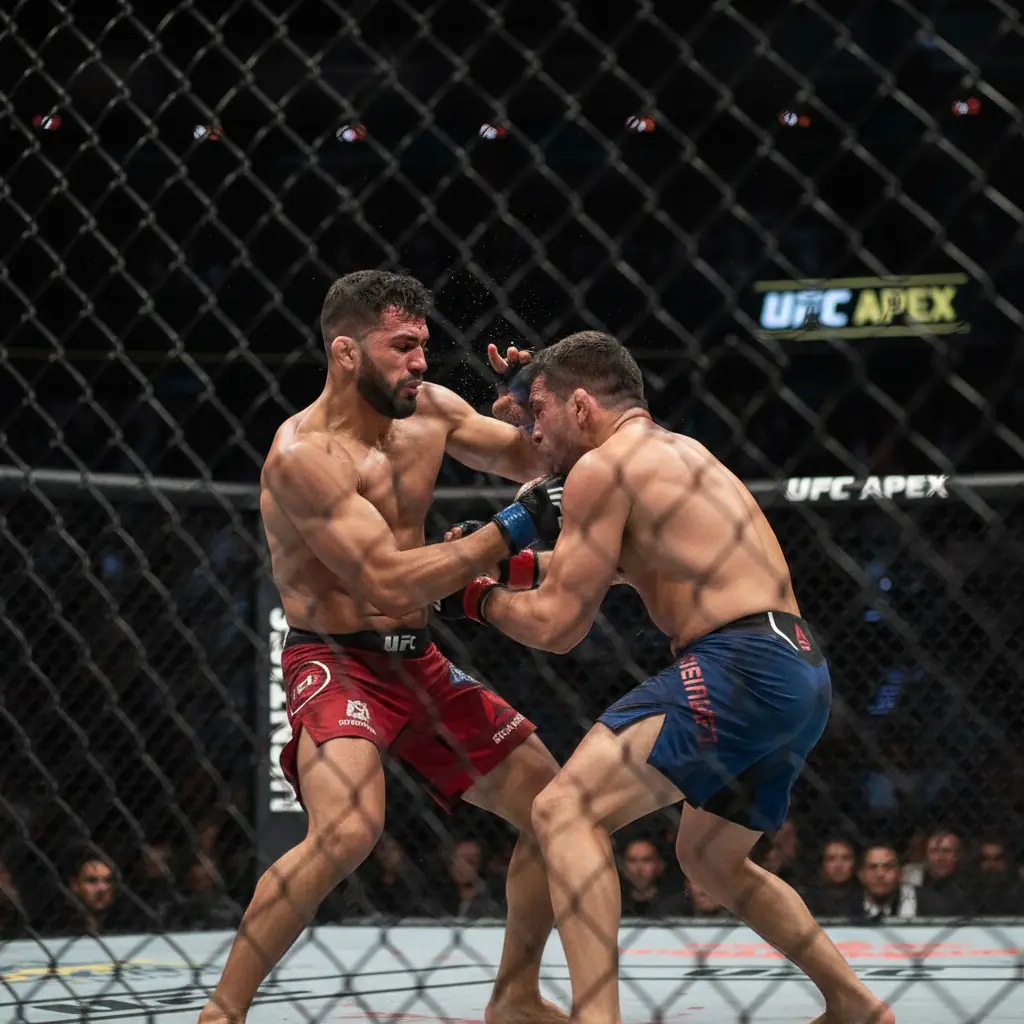
The most immediate difference fighters experience at the Apex is the reduced space. The smaller cage dramatically alters fight dynamics. There’s less room to maneuver, forcing quicker engagements and sustained pressure. Footwork becomes even more crucial, and fighters who excel at cutting off the cage have a distinct advantage. Opponents can find themselves backed against the fence more frequently, leading to more grappling exchanges and a higher chance of knockouts in close quarters. This environment rewards aggression and those who thrive under pressure.
Performing at the Apex comes with its own kind of pressure. While the venue lacks the roaring crowds of a stadium, the intensity is palpable. Fighters are acutely aware that every move is being scrutinized. This “pressure cooker” atmosphere separates those who can maintain composure and execute their game plan from those who crumble. The Apex is a proving ground where mental fortitude is just as important as physical skill.
Despite the inherent pressures, the Apex offers unparalleled opportunities. It provides consistent exposure for fighters, allowing them to showcase their skills to a global audience. A standout performance at the Apex can be a career-altering moment, catapulting them into the spotlight and onto the radar of top contenders. For up-and-coming athletes, it’s a chance to gain valuable experience and build their resume, while established fighters can use it to stay active and remind the world of their abilities. The UFC Apex is the place to prove their skills.
Defining a ‘Prospect’
In the UFC lightweight division, the term “prospect” signifies more than just a promising win/loss record. It’s about identifying fighters with the potential to climb the ranks and contend for a title. Several criteria come into play when evaluating a prospect. Age is a factor; younger fighters generally have more time to develop and improve. A solid fight record is important, but the quality of opponents faced is equally crucial. A prospect should demonstrate a well-rounded skillset, showcasing proficiency in striking, grappling, and wrestling.
However, pure potential is the most important factor. Can the fighter adapt, learn, and evolve? Are they showing signs of improvement between fights? A fighter who fits this definition might be relatively new to the UFC but demonstrates explosive athleticism and a willingness to learn. Conversely, a fighter with a long record of wins against weaker opponents may not be considered a prospect if they have plateaued in their development. Identifying genuine prospects requires a keen eye for detail, looking beyond surface-level stats to see the raw talent and dedication that could propel a fighter to the top.
Key Lightweight Prospects to Watch
The UFC’s lightweight division is a shark tank, a proving ground where only the toughest survive. While established names dominate the rankings, a new wave of lightweight prospects is constantly emerging, hungry to make their mark. These fighters, with their unique blend of skills and determination, represent the future of the division. Here’s a look at a few lightweight prospects who have the potential to climb the ranks and challenge for the title.
Prospect 1: Arman Tsarukyan
Arman Tsarukyan is a name you’ll likely be hearing for years to come. This Armenian-Russian fighter blends explosive wrestling with rapidly improving striking. His grappling is relentless, constantly pressuring opponents and hunting for takedowns. Once on the ground, he displays impressive control and a developing submission game. His fight against Islam Makhachev, though a loss, showcased his toughness and grappling prowess against one of the division’s elite. You can see that Tsarukyan’s striking continues to evolve, adding power and precision to his already potent wrestling base. One potential area for growth is his striking defense, as he can sometimes be drawn into brawls. However, his aggressive style and unwavering confidence make him a threat to anyone in the division. Tsarukyan fought in the Apex facility and showed he is comfortable with the environment.
Prospect 2: Mateusz Gamrot
Mateusz “Gamer” Gamrot is a Polish powerhouse with a decorated wrestling background. His transition to MMA has been seamless, showcasing a well-rounded skill set with a particular emphasis on top control and ground-and-pound. You will seldom see Gamrot shy away from a takedown; he is persistent in his pursuit. In top position, he rains down heavy strikes, breaking down his opponents. While his striking is serviceable, it’s his grappling that truly sets him apart. He has the ability to control the pace of the fight and dictate where it takes place. An area where Gamrot can improve is developing more diverse submission threats. While his ground-and-pound is effective, adding a dangerous submission arsenal would make him even more formidable. Gamrot has shown a high fight IQ, adjusting his strategy mid-fight when needed. The Apex facility provides a fitting arena for his strategic and calculated approach.
Prospect 3: Jalin Turner
Jalin “The Tarantula” Turner brings a different flavor to the lightweight division. Towering over most of his opponents at 6’3″, Turner utilizes his length and reach to devastating effect. You will notice that his striking is his primary weapon, wielding a powerful jab, straight right, and a variety of kicks. His long limbs allow him to keep opponents at bay, peppering them with strikes from a distance. When opponents close the distance, Turner has shown an improving clinch game and the ability to create space. While his striking is his strength, his wrestling defense has been a point of concern. Strong wrestlers have been able to take him down and control him. However, Turner has been working diligently to improve his takedown defense and grappling skills. His size, striking power, and ever-improving ground game make him a dangerous matchup for anyone. Turner has delivered exciting performances in the Apex, showcasing his ability to finish fights.
Stylistic Matchups and Potential Upsets
Mixed Martial Arts isn’t just about brute strength; it’s a complex dance of skills where stylistic matchups dictate the rhythm and often lead to surprising upsets. The UFC, and especially the smaller cage environment of the Apex, amplifies this dynamic. Think rock, paper, scissors, but with punches, kicks, and takedowns.
Consider the classic striker versus grappler scenario. A world-class wrestler with a granite chin can neutralize a flashy striker’s offense by constantly closing the distance and imposing a grappling-heavy game plan. At the Apex, the smaller cage makes it harder for strikers to create space and avoid takedowns, favoring the grappler even more. Conversely, a striker with exceptional takedown defense and knockout power can turn the tables, keeping the fight standing and exploiting any opening with devastating strikes.
To win in MMA, fighters must develop and implement smart game plans. Analyze an opponent’s strengths and weaknesses, and choose a strategy that nullifies their advantages while maximizing one’s own. Effective use of wrestling, striking, and grappling, but also the importance of ring control, pacing, and mental fortitude are key to success.
In essence, stylistic matchups are the silent architects of upsets. They are where careful planning, strategic execution, and a fighter’s willingness to adapt can turn the odds on their head and make the impossible, possible.
The Role of Coaching and Development
In the brutal arena of UFC, natural talent alone rarely carries a fighter to the top. Think of raw potential as unrefined ore; it requires skilled hands and meticulous processes to forge it into a weapon. That’s where coaching and development step in – they are the architects of a fighter’s rise, the sculptors of their skills, and the strategists behind their victories.
Good coaching transcends simply barking orders or running drills. It’s about forging a strong mentorship, understanding a fighter’s individual strengths and weaknesses, and crafting a training program tailored to their specific needs and fight style. A great coach sees potential where others don’t, pushing a fighter beyond their perceived limits while ensuring they avoid burnout and stay healthy.
Fight camps are where the magic truly happens. These intensive periods of training are designed to prepare a fighter both physically and mentally for the war they are about to enter. They involve grueling workouts, meticulous film study, and strategic sparring sessions with carefully selected partners who can simulate the opponent’s style. The camaraderie and support within a good fight camp are invaluable, creating a brotherhood (or sisterhood) that bolsters confidence and provides crucial emotional support.
The value of experienced mentors cannot be overstated. They’ve been through the battles, felt the pressure, and understand the psychological warfare that goes hand-in-hand with combat sports. They offer invaluable advice, share hard-earned wisdom, and provide a steadying presence during turbulent times. Similarly, a supportive gym environment breeds success. These gyms provide access to top-notch facilities, a network of skilled sparring partners, and a culture of discipline and dedication that fosters growth. The right coaching, combined with a comprehensive training regime, and supportive environment is the bedrock of any successful UFC contender.

Predicting Future Success
Beyond the highlight reels and knockout victories, predicting long-term success in MMA requires a keen eye for detail and an understanding of what truly makes a champion. It’s about evaluating prospects not just on their current abilities, but on their capacity to evolve and endure.
Fight IQ is paramount. Does the fighter understand distance, timing, and angles? Can they make tactical adjustments mid-fight? Adaptability is another crucial trait. The ability to learn new skills, adjust strategies, and overcome adversity separates the contenders from the champions. A fighter’s mental fortitude often determines who can withstand the pressures of competition and bounce back stronger from setbacks.
Consistency in performance speaks volumes. Do they consistently show up prepared, focused, and ready to execute their game plan? Finally, a clear growth trajectory is essential. Are they steadily improving their skills, expanding their knowledge, and pushing their boundaries?
Conclusion
The world of UFC lightweight prospects is electrifying. Identifying and following these rising stars offers a glimpse into the future of the sport. Their dedication, combined with raw talent, creates a potent mix that translates to captivating performances in the octagon.
The lightweight division is on the cusp of a new era, fueled by these hungry and determined athletes. The excitement surrounding their potential is palpable. Keep an eye on these lightweight prospects; they are poised to reshape the landscape of the UFC for years to come. The future is bright, and it’s unfolding right before our eyes.